
Guests see about thirty minutes of a celebrant's work. Here's the rest of it.
7:40am
The script was finished one month ago after several meetings and ongoing communication. It's printed (or on a tablet)in a folder, in the boot. It's also on the phone, because folders have been left on kitchen tables before.
Check: script, spare script, fountain pen and several fountain pens, the handfasting cords, the bag with the emergency tissues, emergency sewing kit in it. Tissues get used at roughly one wedding in three, and never by the person you'd expect.
9:15am
Leave far too early. Every celebrant does this and none of us apologise for it. Being late is the one thing in this job you genuinely cannot recover from.
10:50am
Arrive at a barn, hotel or their chosen venue. First job: find the person actually running the day. Sometimes that's a coordinator, sometimes it's the bride's aunt with a clipboard and a hard stare. Either way, that's who you need.
Where are they walking in from? Is the PA working? Where's the sun going to be at half twelve, and is it going to be directly in the groom's eyes?
Then find the photographer and have a thirty-second conversation. Tell them when the vows are, when the kiss is, and whether there's a surprise in the ceremony. Photographers remember celebrants who do this. Photographers recommend celebrants who do this.
11:30am
Find the person who's doing the reading, because they're the most nervous person in the building and nobody has spoken to them. Show them where to stand. Tell them the microphone does the work.
Find the two people signing. Tell them what happens.
Then find the one who's arrived early — there's always one — and talk to them about the weather.
12:05pm
The other half of the couple arrives, usually looking like they've been holding their breath since Tuesday. Take them somewhere quiet for two minutes. Not to run through anything. Just to let them arrive.
This is, frankly, half the job.
12:30pm
Everyone's seated. Music starts.
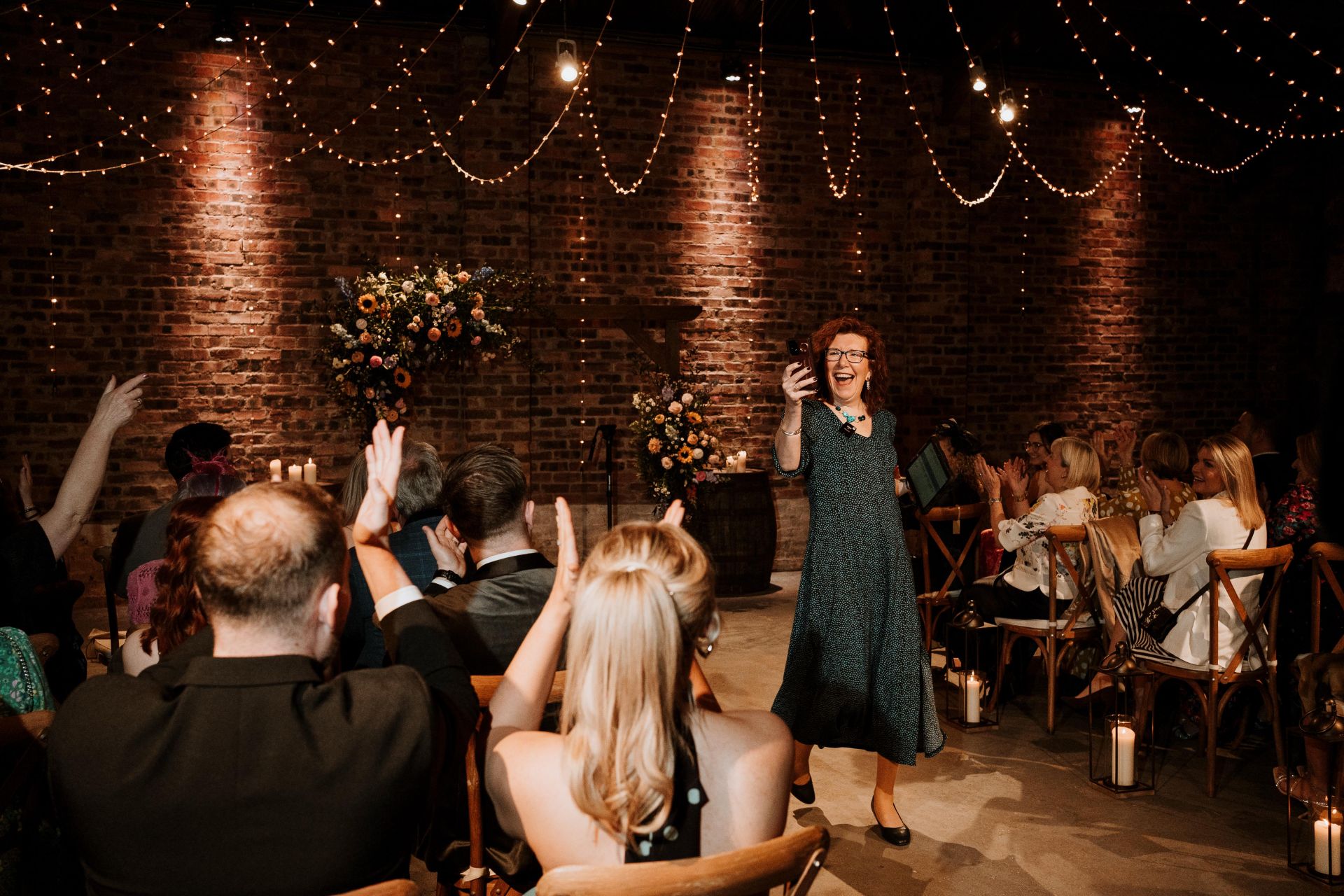
And this is the moment the whole thing turns, because for thirty minutes there's no folder and no plan — there's just you, two people, and a room full of people who love them.
You tell their story. The bit about the terrible first date gets the laugh it got when you read it aloud in your kitchen. The bit about her dad doesn't, and shouldn't. You watch a hundred people all mesmerised by your every word.
Then they say the words, and you get to be six feet away when they do.
1:00pm
Paperwork, photographs, and then the part nobody mentions: you become slightly invisible. The day belongs to them again. Say your goodbyes properly, hand your cards to the two suppliers who asked, and go.
2:20pm
Sitting in the car in a field, eating a sandwich, absolutely wrung out.
There's a specific tiredness to this work. It isn't physical. You've been carrying the emotional weight of somebody's biggest day for four hours and now you can put it down.
3:15pm
Home. Kettle on.
Somewhere in the next fortnight there'll be a message with a photograph attached, and it'll say some version of the same thing: thank you, it was exactly us.
That's the whole job, really. Everything else is admin.
The honest bit
Not every day is that one.
Some are ninety minutes each way in traffic. Some are outdoors in Scottish drizzle with a PA that won't connect. Some are funerals, and those days end differently.
And behind every wedding day there are two meetings, three drafts and a fair bit of email.
But the shape of it — the drive, the room, the twenty-five minutes, the sandwich in the field — that's the job. If reading it made you want to do it, that's worth paying attention to.

Copyright © 2026
Created with